Niccolò Piccinni, Il Mondo Della Luna - Sakros download free
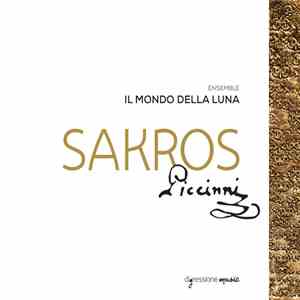
| Genre: | Classical |
| Performer: | Niccolò Piccinni |
| Title: | Sakros |
| Style: | Baroque |
| Date of release: | 2015 |
| MP3 album size: | 1606 mb |
| FLAC APE album size: | 1650 mb |
| WMA album size: | 1646 mb |
| Digital formats: | MP4 WAV MPC MP1 MIDI DTS VOX |

Tracklist
| 1 | Pater noster: Pater noster | 04:56 |
| 2 | Pater noster: Adveniat regnum tuum | 02:41 |
| 3 | Pater noster: Panem nostrum quotidianum | 03:51 |
| 4 | Pater noster: Et ne nos inducas in tentationem | 01:58 |
| 5 | Pater noster: Gloria Patri | 04:08 |
| 6 | Pater noster: Sicut erat in principio | 02:35 |
| 7 | Credo: Patrem Omnipotentem I | 02:59 |
| 8 | Credo: Et Incarnatus I | 00:56 |
| 9 | Credo: Crucifixus I | 01:09 |
| 10 | Credo: Et Resurrexit I | 02:50 |
| 11 | Credo: Patrem omnipotentem II | 02:40 |
| 12 | Credo: Et Incarnatus Est II | 00:46 |
| 13 | Credo: Crucifixus II | 01:00 |
| 14 | Credo: Et resurrexit II | 02:30 |
| 15 | Credo: Patrem Omnipotentem III | 02:25 |
| 16 | Credo: Et Incarnatus Est III | 01:52 |
| 17 | Credo: Crucifixus III | 01:01 |
| 18 | Credo: Et resurrexit III | 02:35 |
| 19 | Credo: Patrem omnipotentem IV | 01:59 |
| 20 | Credo: Et Incarnatus Est IV | 00:49 |
| 21 | Credo: Crucifixus IV | 01:04 |
| 22 | Credo: Et Resurrexit IV | 03:13 |
| 23 | Credo: Patrem Omnipotentem V | 01:59 |
| 24 | Credo: Et Incarnatus Est V | 00:49 |
| 25 | Credo: Crucifixus V | 01:09 |
| 26 | Credo: Et Resurrexit V | 03:08 |
| 27 | Credo: Amen | 01:07 |
Notes
Sacred Piccinni: the theatre of faith from the Credo to the Pater NosterThe prayer Pater Noster is considered one of the most inspired and well-known scores of Niccolò Piccinni (Bari 1728 – Parigi 1800), a great master of the Neapolitan School, an oustanding figure and music composer of Europe during the Age of the Enlightenment. The manuscript “composed for the Queen of France and Navarre Marie Antoinette” promptly stands out: this is demonstrated by the fact that a great deal of sources have survived to the present day. Old copies of the time in their fine bindings are found in important collections of Rome, Bologna, Milan, Wien, Muenster, Moscow and Copenaghen.
After a long oblivion, during the 21st century the fortune of this score seems to recommence from Apulia, Piccinni’s homeland, thanks to a first printing edited by father Anselmo Susca osb (Il Grifo edition, Bari 2000) together with Vito Paternoster (he has often conducted live performances of this work) and this very first recording conducted by Grazia Bonasia. On this occasion the source used for the performance is an elegant manuscript being preserved in Copenhagen (DK-Kk, ms. mu. 6311.1834) as appears in the noted autograph «G. Koës, Roma 1810», in the musical fund collected by the classic philologist Georg Koës during his journey in Italy.
Piccinni’s Pater Noster has been passed down in rare transcriptions “per alto solo” whereas most versions, amongst those the one played here, also contemplate the soprano soloist besides strings and continuo.
The long and virtuoso work which is a unique synthesis – in the typical Neapolitan manner- of both theatre and religious worship, distributes/allots the sacred text throughout different sections -though well identified- most of the time introduced by powerful orchestral episodes that set the scene for the singer wizardry technique and the intensity of the content. The same magnificent beauty is epitomised by the musical rich texture of the Trinitarian doxology represented by the Gloria Patri and the solemn final Amen.
Another treasured work by Piccinni that completes this recording, is one song of the Ordinarium Missae namely the Credo for three voices with strings and continuo, whose manuscript is kept in Assisi at the Sacred Convent of St. Francis (Fondo antico, ms 303/2).
The score layout is somewhat unusual in its choice to provide up to five intonations for the same verses belonging to the same silloge -all of them performed in this recording- although the arrangement of the old liturgical book is doubtless traditional (Patrem, Et incarnatus, Crucifixus, Et resurrexit).
Same verses, different variations in music: alternative options written to the benefit of either potential performers-commissioners or as juvenile exercises for the training of the art of work “in modern style” and/or that of Palestrina? Amongst the pedagogical pillars of the Neapolitan school there was intonation of profane verses and mainly of religious passages in order to develop a comprehensive proficiency-based training and to be able to deal with any technical, educational, artistic and aesthetic need. This Credo might be a juvenile exercise, yet not immature, by Niccolò Piccinni; it clearly foresees the most mature Pater Noster and a deluge of masterpieces composed by a great master unfortunately still poorly recognized and performed.
Barcode and Other Identifiers
- Barcode: 8054726140573